The Most Common Mistake When Managing Rental Properties (And How to Avoid It)


Managing one or several rental properties often feels simple… until it isn't.
- A rent payment you're not sure was received.
- A maintenance expense you forgot to record.
- A lease that expires “sometime soon”… but you don't know exactly when.
👉 The most common mistake among landlords and real estate investors isn't buying the wrong property, it's not having a clear, centralized rental property management system.
And no, scattered spreadsheets, notes on your phone, or old emails don't count as a system.
Key Tip: Centralize Everything in One Place (Or You'll Lose Control)
Whether you manage one unit or twenty, you need one single source of truth for:
- Property details
- Tenant information
- Rental income
- Expenses and maintenance costs
- Service requests
- Tasks and reminders
- Important documents
When this information is spread across tools and files, three things inevitably happen:
❌ You waste time searching
❌ You make financial mistakes
❌ You make decisions without clear data
The tip is simple but powerful:
Everything related to your rental properties should live in one connected system.
The Real Problem Isn't the Tool, It's Starting From Scratch
Many landlords try to “get organized” by building their own system from zero: a new spreadsheet, a homemade database, endless columns that change every month…
The result is usually the same:
- The system grows without structure
- Small changes break everything
- Eventually, it gets abandoned
This is where Notion becomes especially powerful.
Why Notion Works So Well for Rental Property Management
Notion isn't just a note-taking app. Used properly, it becomes a fully customizable property management system.
With Notion, you can:
- Add new fields based on your needs
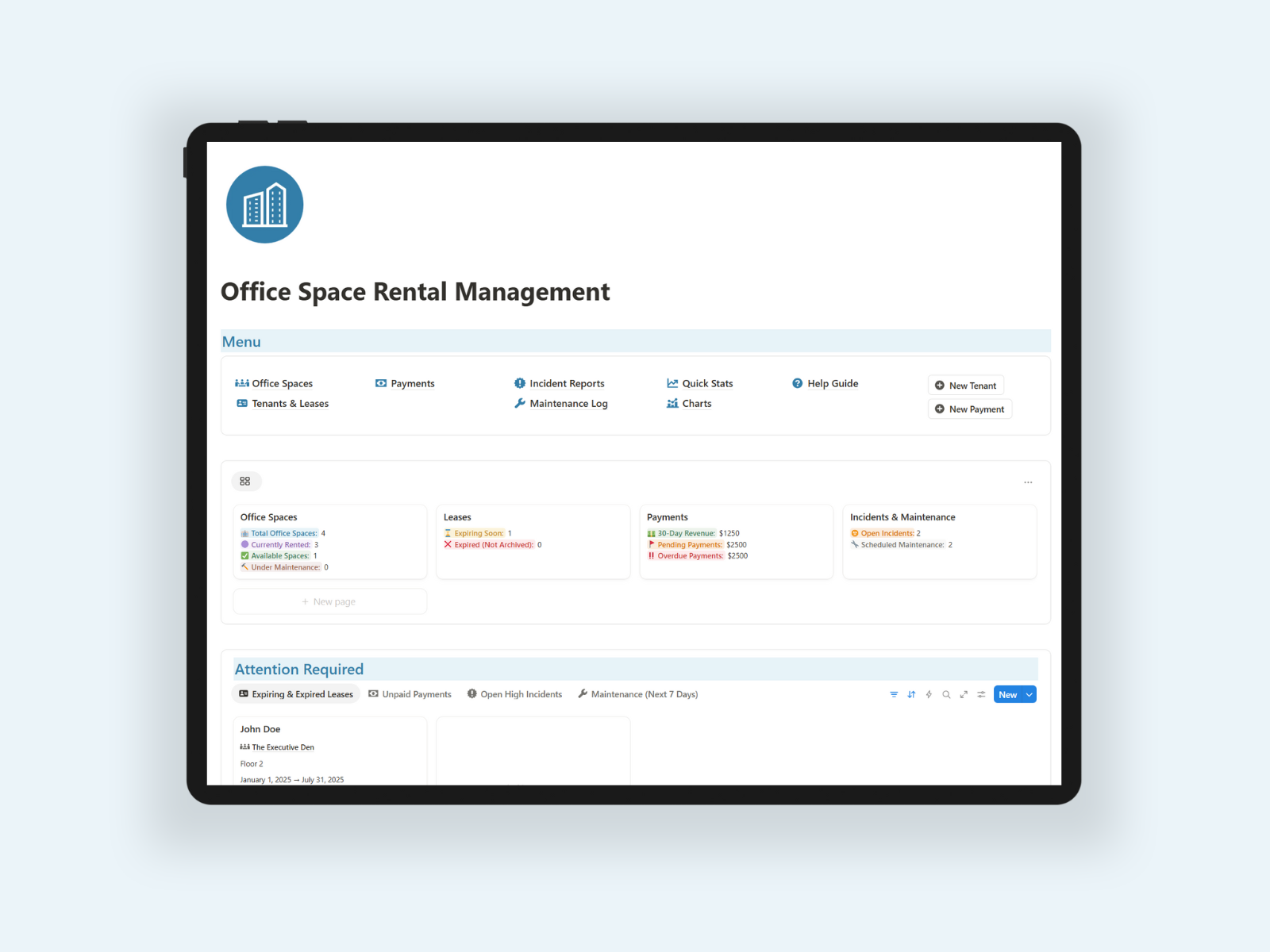
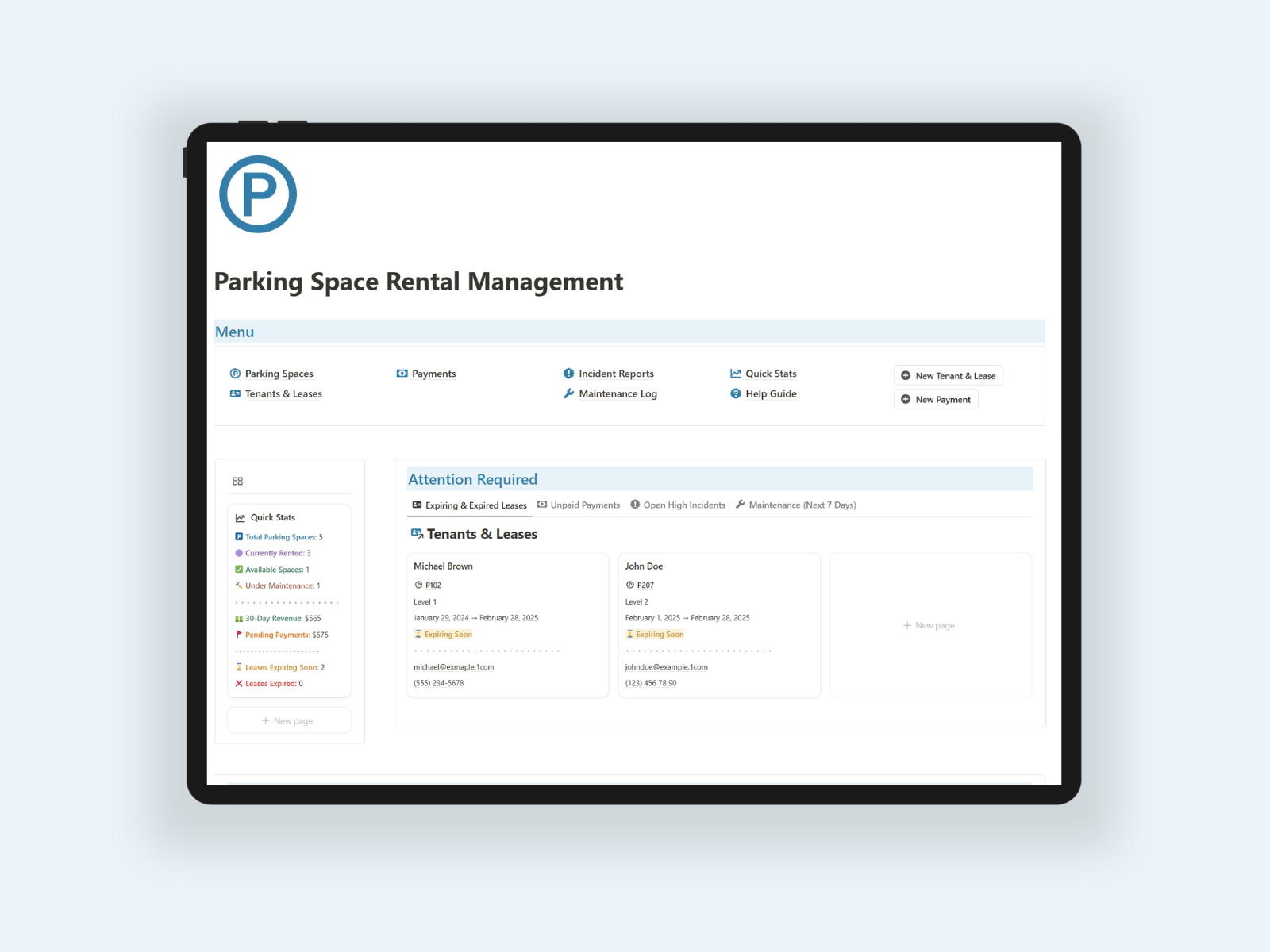
- Create custom views (tables, calendars, dashboards, reports)
- Relate databases to each other
- Adapt workflows to local rules, rental types, or personal preferences
In short:
👉 the system adapts to your business, not the other way around.
So Why Use a Template Instead of Starting From Zero?
Flexibility is powerful… but starting from a blank page isn't always smart.
Here's the key difference:
❌ Starting from scratch: time-consuming, error-prone, lots of trial and error
✅ Starting with a proven template: structure and clarity from day one
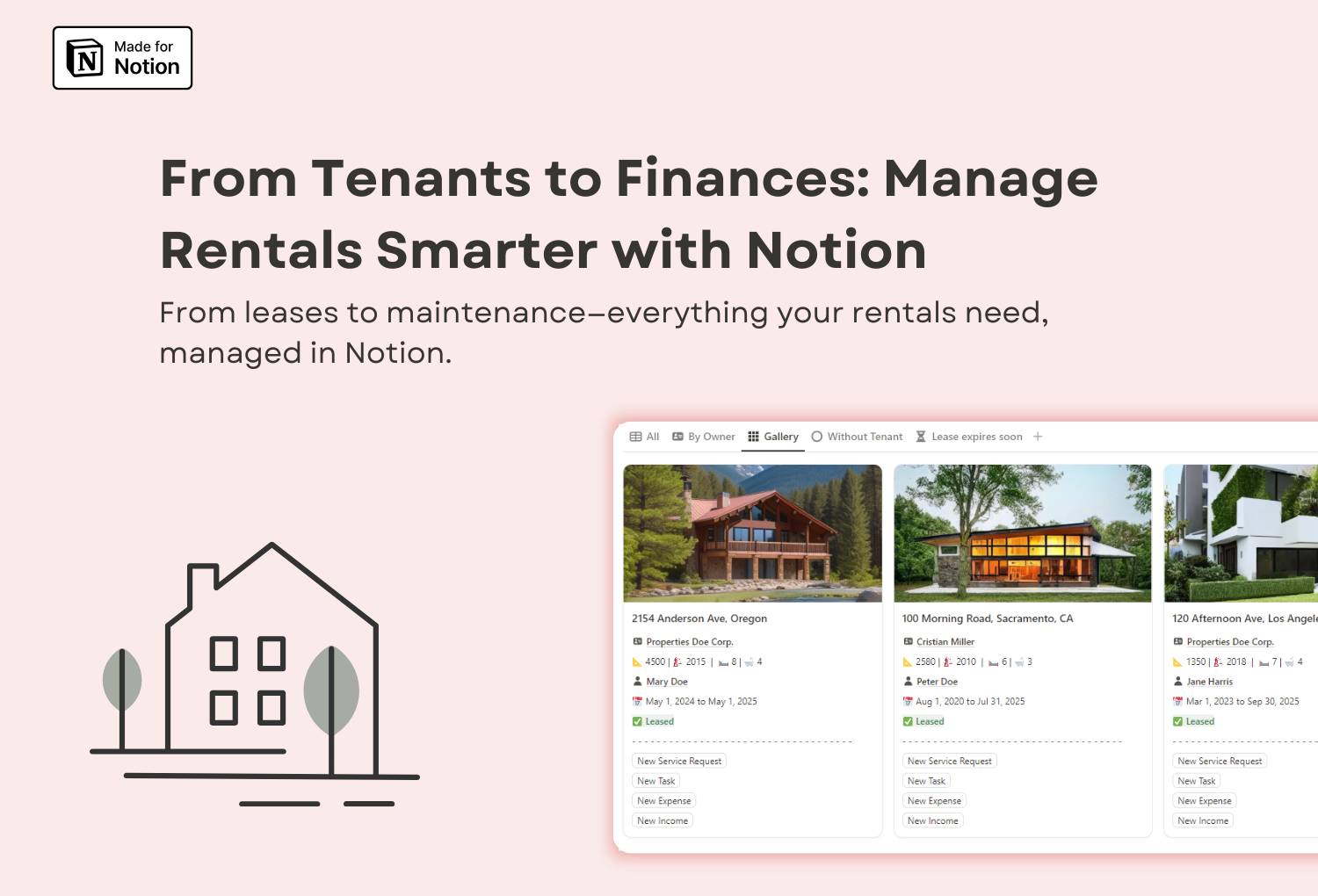
The advantage of using my Rental Property Management template is that you don't start from zero.
You start with a system that has already been:
- Carefully designed
- Improved over multiple iterations
- Used and tested for years by real users in the rental and property management space
From there, you can:
- Customize it
- Expand it
- Adapt it to your specific workflow
Without wasting weeks building the foundation.
A System That Grows With You
Many landlords managing multiple properties today started with just one.
That's why this template is designed to:
- Scale without losing control
- Maintain clear financial visibility
- Keep properties, tenants, maintenance, tasks, and documents fully connected
Everything in one place.
Everything easy to find.
Everything under control.
Who Is This Approach Perfect For?
✔️ Rental property owners and landlords
✔️ Real estate investors managing their own portfolio
✔️ Property managers handling multiple units or owners
✔️ Real estate or virtual assistants supporting rental operations
If you fit any of these profiles, you already know: organization isn't optional, it's the difference between profitable rentals and constant stress.
Start With a System, Not Improvisation
It's not about working more. It's about starting with a system that already works and adapting it to your needs.
If you want a flexible, proven foundation to manage your rental properties,
👉 you can take a look at the Rental Property Management Notion template
and start organizing everything in minutes — without stress and without reinventing the wheel.